
G’day — I’m Seb, and I live in an old church.
Yep, it’s as cool as it sounds. High ceilings, stained glass windows, and a whole lot of character. When I first walked through the doors of this old Melbourne church, I wasn’t thinking about resale value or practicality — I just fell in love.
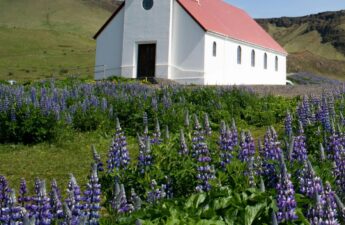
Since then, I’ve learned that I’m not alone. All around Australia (and the world, really), old churches are being transformed into homes, cafes, art spaces and community centres. And while it’s not always easy, converting a church for modern living can be a beautiful way to give a sacred space a second life.
Here’s a look at how — and why — people are doing it.
Why Churches Are Being Converted
It’s no secret that fewer people are going to church these days. As congregations shrink, some churches are left without enough support to stay open and they’re hardwork to maintain. Rather than see these beautiful buildings fall into disrepair, many are being sold off — often to people like me, who have no plans to hold Sunday mass but can’t resist the charm.
For some, it’s about preserving history. For others, it’s the uniqueness — there’s nothing cookie-cutter about a church. And let’s be honest, the photos pretty much take themselves.
The Challenges No One Warns You About
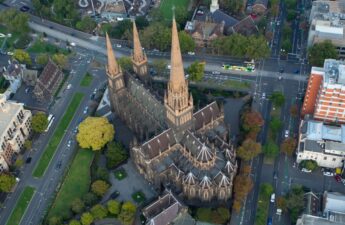
As dreamy as it sounds, converting a church isn’t exactly plug-and-play. There are plenty of quirks (and council forms) that come with the territory. For starters, you’re often dealing with heritage restrictions, especially in Melbourne. That means certain parts of the building — like the façade or original windows — can’t be altered without approval.
Then there’s the practical stuff. Heating or cooling a space with 5-metre ceilings? Not cheap. Trying to insulate stone walls? Bit of a mission. And if you’re hoping for a nice, quiet bedroom… well, let’s just say acoustics in a church were designed for organ music, not Netflix on on the couch.
That said, the payoff is worth it. Once you work with the building instead of against it, the results can be magic.
Church Features That Shine in Modern Conversions
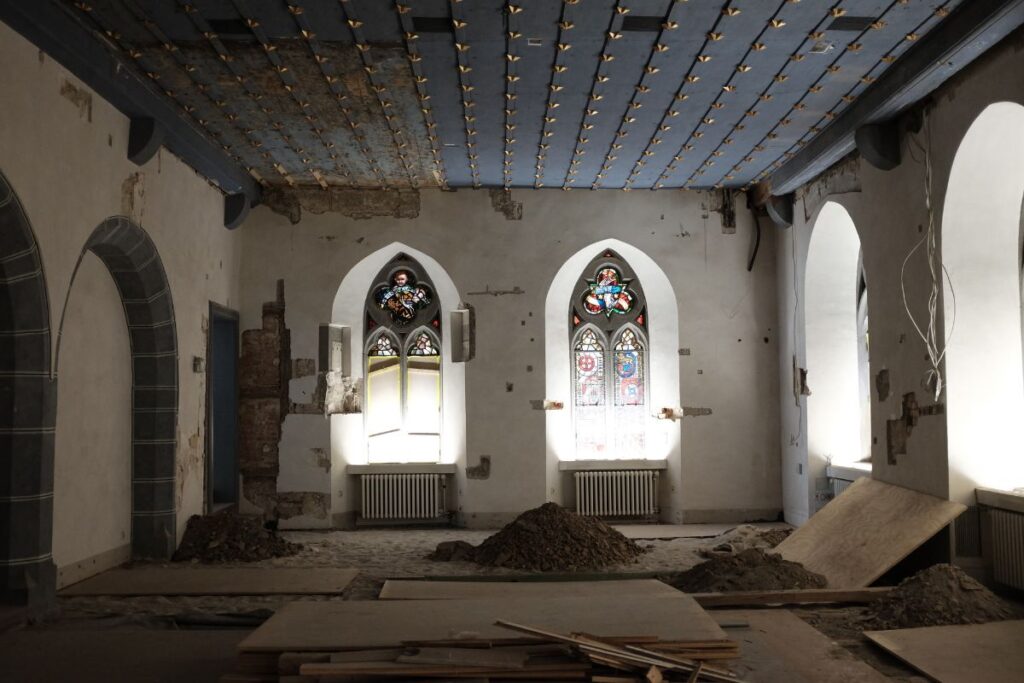
One of the best things about adapting a church is how many of its original features still shine in a modern setting. Arches become room dividers. Pews turn into built-in benches. Stained glass becomes a one-of-a-kind light feature.
Some clever conversions I’ve seen around Melbourne use the former nave as an open-plan living room, while the altar area becomes a raised dining or kitchen space. Loft bedrooms work beautifully thanks to all that vertical space, and those old timber beams? Leave them exposed and let them tell their story.
Even the entryways feel special — you don’t get carved timber doors and stone steps in your average brick veneer.
I also admire some bold adaptations – some churches are so run down that it becomes inevitable to merge tradition with innovation. It also makes sense to bring in new features that are long-lasting solutions that won’t require a lot of maintenance. In Melborune concrete flooring has been a great addition for us – a durable material that is easy to clean and will survive kids and pets.
A Few Inspiring Examples
There’s a place in Brunswick that’s been converted into artist studios and event space — full of natural light and community buzz. Down in Brighton, I saw a former chapel turned into a family home, complete with polished floors and a mezzanine library that made me genuinely jealous.
What ties them all together is the respect for the original architecture. It’s not about gutting the space and starting from scratch — it’s about honouring its past while making it practical for the present.
Living in a Church: More Than Just a House
I can’t speak for everyone, but for me, living in a church brings a certain kind of peace. Maybe it’s the light, maybe it’s the quiet, or maybe it’s just the knowledge that this building has seen decades of community, connection and care.
Sure, I’ve had to get creative with storage, and heating the place in winter is a bit of a saga — but I wouldn’t trade it for anything. It’s home, with soul.
Thinking of Buying a Church?
If you’re considering it, here are a few friendly tips:
- Talk to your local council early. They’ll let you know what’s heritage protected and what’s not.
- Get a building inspection from someone familiar with historic structures.
- Be prepared to adapt — not everything will be straightforward, but that’s part of the fun.
Final Thoughts
Old churches might not be filled with worshippers anymore, but that doesn’t mean they’re finished serving a purpose. Whether they become homes, galleries, libraries or something else entirely, these buildings still have life in them — and plenty to give.
And hey, if you ever get the chance to live in one… I say go for it. Cheers for reading — Seb